
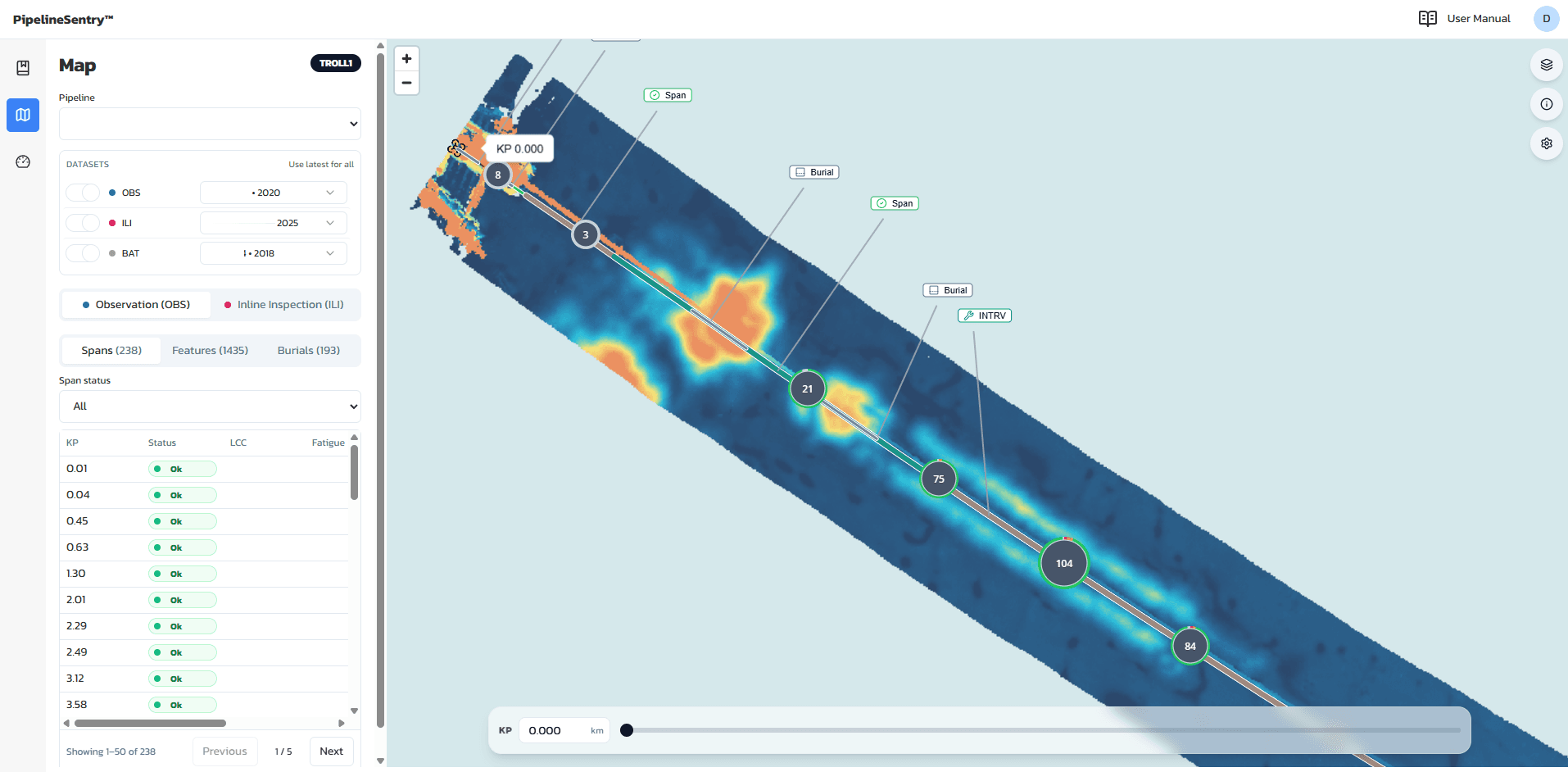
This update looks at how map-based context helps users move from records to real asset locations.
A pipeline record is easier to understand when users can see where it belongs. Location gives inspection results, survey outputs and asset records practical meaning. It helps teams understand what is nearby, what has changed over time and how a finding relates to the wider system.
PipelineSentry's map-based asset context is being developed to make that relationship clearer. The map view gives users a way to move from an overview of the asset into the records, sections and findings that need attention.
A bridge between data and place
Integrity data is often reviewed in tables, reports and exported files. Those formats are useful, but they can separate the information from the physical asset. A finding may have a KP reference, a coordinate or a report figure, yet still require effort to understand in context.
The map view is intended to reduce that effort. It gives users a spatial starting point for reviewing pipeline sections, nearby features, inspection coverage and supporting evidence. That does not replace engineering review, but it can make the review easier to begin and easier to explain.
Making campaign context visible
Inspection and survey campaigns create a large amount of location-based information. Over time, that information can become difficult to compare if it lives only in separate deliverables. A map-based view can help users understand how records from different campaigns relate to the same asset.
This is particularly useful when a team needs to compare current findings with previous work. Seeing records in location context can make it easier to recognise repeat areas of interest, understand coverage and identify where more detailed review is needed.
Designed for practical review
The goal for this feature is practical rather than decorative. Users should be able to use the map to orient themselves, inspect asset context and open the records that support their work. The map should help answer the basic review question: where is this, and what do we know about it?
That makes the map an important companion to the centralised directory. The directory helps users find records by asset context. The map helps users understand those records in place. Together, they reduce the amount of manual reconstruction needed before a decision can be made.
Part of the connected product model
Map-based context also supports the wider PipelineSentry workflow. A location shown on the map should be able to connect back to source records, inspection evidence, review status and future visualisation views.
This is the direction of the product: users should not have to rebuild context every time they move between views. The asset context should follow the work, whether the user starts from a file, a map, a workflow item or a visual model.